
Intro: India is pushing toward a $5 trillion economy, but private investment still hesitates despite strong government spending. With global wars, supply chain disruptions and rising protectionism, the real question is—can India fix internal gaps fast enough to turn uncertainty into its biggest growth opportunity? Mahima Sharma of Indiastat spoke to senior independent economist Dr Ramesh Chandra in an exclusive conversation on Socio-economic Voice. Read the full interview here….
MS: India is targeting ~$5 trillion GDP while private capex recovery remains uneven. What specific policy trigger is still missing to unlock sustained investment?
Dr. Chandra: India is officially targeting a $5 trillion economy by 2027-28 though IMF projections suggest its achievement will be closer to 2028-29. While private capex is flagging, the government has not only maintained its capex but also significantly increased it during FY26 and FY27. In view of the lagging private investment, the government is following a policy of public investment-led growth particularly in infrastructure, defence, power/grid modernisation etc. This government capex increase is being sought to be done in the framework of fiscal consolidation and lower debt/GDP ratio. While at the central level capex growth is strong the same cannot be said about the state-level capital spending.
The government has taken a series of measures to supplement its government investment-led growth strategy with consumption-led growth. For example, the exemption limit for income tax was significantly increased to 12 lakhs and GST saw a major rationalisation from multi-slab structure to two slabs. The rates were also significantly reduced to two main rates – 5% (merit rate) and 18% standard rate. But private investment is not strong. You can take the horse to water but you cannot force it to drink. Wars in Ukraine, Gaza and now in Iran have contributed to trade uncertainties and disruption of supply chains particularly in oil and gas. Reciprocal tariffs imposed by Trump also worsened the situation with the US wanting to punish India for buying Russian oil and arms. Trade policy has been increasingly weaponised. The world appears to be moving away from a multilateral trade framework to bilateral deals. While some of these factors may be outside our control, India should make redoubled efforts to strengthen its domestic supply chains in the areas of semi-conductors, critical minerals, electronics, defence equipment etc. At the same time, the search for alternative export markets like Africa, Latin America, Europe etc. has to continue. Afterall, you don’t want to put most of your eggs in a USA basket. India can continuously work for reforms and hope that when the world climate turns positive it is well-prepared to take advantage. It should however be emphasised that private investment is much more a matter of expectations about the future which is uncertain.
MS: With India’s inflation hovering near the upper band of Reserve Bank of India tolerance, how should monetary policy balance growth without choking consumption?
Dr. Chandra: From recent lows, India’s retail inflation has picked up slightly from February 2026 to 3.21% driven by rising food prices. But it is well within the RBI’s tolerance band of 2-6%. With the recent US-Iran war and with the Strait of Hormuz emerging as a choke point, pressure on fuel prices is also expected to arise. While the prices of LPG gas have already gone up, petrol-diesel may also feel the pressure. In its February meeting MPC of the RBI maintained a neutral stance to balance growth with inflation. The repo rate was maintained at 5.25% for a second time consecutively from the earlier accommodative stance of lowering the rate.
With the recent disruptions of supply chains especially in oil and gas, cost push factors are likely to see inflationary pressures building up. If supply chain disruptions continue it is difficult to foresee an accommodative monetary policy stance to boost growth. The current neutral stance of balancing inflation with growth is likely to continue in the foreseeable future. Although the US has permitted sourcing of Russian oil and Iranian oil at sea, how far these will make up for the loss of supplies is an open question. Besides, the US ‘permitting’ India to buy oil from Russia (or Iran) has its own downside in Indian politics.
MS: India’s exports remain sensitive to slowdown in the European Union and United States. What structural shift is needed to reduce this dependency?
Dr Chandra: It is not a good idea to depend on one or two markets like the US or Europe for your exports. Slowdown in these markets will slow down Indian exports. Besides, trade policy is being increasingly used as a weapon to coerce you to give concessions. For example, Trump used 50% tariffs against India as a bargaining chip to get concessions from India. This had a disrupting effect on Indian trade till India decided that some sort of trade deal is better than no trade deal at all. Now the situation is that while Indian exports face 18% import duties in America, American exports to India face zero percent or reduced duties in agreed areas of manufacturing and agriculture. To counteract export slowdown in these markets, India can follow a multi-pronged strategy. First, India has to finalise trade deals with important countries and blocks. India has already signed trade deals/FTAs with UAE, Oman, Australia, New Zealand, UK, EFTA (consisting of Switzerland, Norway, Iceland and Liechtenstein) etc. Many more such deals are required as multilateralism is on the decline and bilateral arrangements are increasingly becoming important. India recently concluded an FTA and investment protection agreement with the EU. Secondly, India can target alternative export destinations in Africa, Latin America, Middle East and Asia. Thirdly, India can move beyond labour intensive items like textiles, garments and gems and jewellery towards value added items like processed foods, specialty chemicals and advanced manufacturing. Defence exports can be another area where India can do well. In the last ten years or so India has been able to not only reduce its import dependence but also boost exports to friendly countries like France, Philippines, Armenia, Vietnam etc. India is involved in exploring the sale of armoured vehicles, advanced artillery guns, Pinaka, Brahmos, Rudram anti-radiation missiles, Akash system and loitering munitions. India is also increasingly getting integrated in global defence chains by supplying defence parts and components. As a result, India’s exports rose from Rs. 686 cr. in 2013-14 to Rs. 38, 424 cr in 2025-26. Defence exports in FY26 registered a jump of 63% from FY25 suggesting an acceleration. India is emerging as a rising global player in defence exports. Many Indian platforms and weapon systems like Brahmos, Pinaka, Akash etc. are in great demand. After Operation Sindoor, the credibility of Indian weapons has shot up.
MS: Despite “China+1”, India’s manufacturing share in GDP is still around 16–17%, what are the two biggest execution gaps holding it back?
Dr. Chandra: The China +1 approach emerged as a mitigation strategy to diversify supply chains away from China by establishing manufacturing and supply chains in other countries like Vietnam, India and Mexico to reduce vulnerability or risks arising from disruptions caused by pandemics, geopolitics, rising labour costs in China, etc. The idea was to reduce dependence on a single source. This approach was only partly successful with India emerging as an electronics and mobile exporter, Mexico servicing the North American market and Vietnam becoming a manufacturing hub for electronics and apparel. While the approach started with rising labour costs in China, it gained momentum after the financial crisis of 2008 and gained further fillip after Covid 19. The reasons for partial success could be lack of supply ecosystems or lack of quality control in these countries. Another reason could be that higher initial investments required for logistics networks were costly. In India, though some industries like electronics or smartphones have seen good progress, they are more in the nature of component assembly rather than component manufacturing. As a result, India’s manufacturing share in GDP has almost remained stagnant at 16-17%. India has lacked capabilities in many areas like critical mineral magnets and semiconductors. Similarly, India’s LCA project has not taken off because of lack of jet engines manufacturing capabilities. India imports General Electric F404 engines from the USA but supplies have been repeatedly delayed perhaps because of the fear of India emerging a competitor in defence jet manufacturing. India’s Kaveri engine does not have sufficient thrust to power LAC. India didn’t even lack engine testing capabilities which it is trying to address now. India is also addressing critical gaps in areas like semiconductors and critical mineral magnets.
There are also a number of other factors at work keeping India’s manufacturing GDP share stagnant. First, agriculture exercises a demand-constraint on industry. India’s attempts to reform agricultural markets met with resistance from the farmers themselves whom they were meant to help. Second, manufacturing requires flexible labour laws or some freedom in hiring and laying off workers. But, unfortunately, this is lacking in India. The recent labour codes make for easier labour exit for units employing upto 300 employees. But unless this law is extended to other units, formal employment of labour offering social security, safety, welfare measures will remain problematic. If you can’t fire a worker during slack, why should businesses offer him regular employment? So they go in for contract or short-term employment. Third, industry requires land especially for greenfield projects and if the land acquisition is so cumbersome involving social impact assessments and prohibitive payments as compensation which is many times the market compensation (reaching up to 4 times the market price in rural and twice in urban areas). Thus, for manufacturing to develop, a mechanism to offer remunerative prices to farmers (higher than MSP in official mandis under the APMC Act) has to be developed by freer exports and through the establishment of alternative cooperative or private mandis. Manufacturing also requires flexible factor markets in labour and land which are lacking. While product markets have been considerably freed up, factor markets remain an area of concern.
MS: With global supply chains fragmenting post-COVID-19 pandemic, is India moving fast enough to capture relocation opportunities or missing the window? What's your future take and advisory on this?
Dr Chandra: Multinational companies are diversifying their manufacturing hubs to reduce dependence on China. Initially, India lagged behind countries like Vietnam but now has solidified its position as an alternative to China in areas like electronics, auto-components and pharmaceuticals.
India showed strong performance with approximately 7% in manufacturing growth during 2025-26. Electronics has emerged as a top performer with mobile phone exports reaching Rs. 2 lakh crores in 2024-25. Manufacturing FDI grew at 18% reaching $19.04 billion during 2024-25. A number of ongoing schemes have contributed to this. Production-linked incentive (PLI) scheme for 14 sectors has helped production particularly in electronics and pharmaceuticals
Secondly, India has emphasised infrastructure sectors like roads, railways, bridges and tunnels. For example, Tripura has been linked to the rest of India by rail. Jammu-Srinagar rail link has also been built. Metro rail networks have been built in many cities and many more are still on the cards including one each for Jammu and Srinagar.
Thirdly, industrial corridors in Dholera and Greater Noida etc. have reduced manufacturing costs. Fourthly, expanding trade agreements have boosted exports. A few further points should also be noted. First, while India is strong in assembling imported components, it is weak in local value addition. This may change with strengthening of local supply chains in critical mineral magnets, semiconductors, electronic components and so on. Similarly, critical gaps in defence production, edible oils, oil and gas etc. should also be addressed through import substitution. Secondly, reforms in labour laws, land acquisition and ease of doing business may give further momentum to manufacturing.
Fourthly, reform of agriculture to give remunerative prices to farmers through alternative mandis and easier exports has to be tackled at some point. Otherwise, agriculture would continue to exercise a demand constraint on industry in India making the target of 25% industry share in GDP difficult if not impossible. Ultimately, farmers have to realise that farm laws were meant to help them boost their purchasing power and relax the demand constraint on manufacturing.
And finally, the question of relocation of supply chains to India after Covid 19 cannot be delinked from the industrial strategy which India must follow and the competitiveness it must acquire to achieve its target of 25% industry share in GDP.
MS: Given rising crude volatility and India importing over 80% of its oil, how should energy strategy evolve to protect macro stability?
Dr. Chandra: With import dependence on crude oil of 85%, India has to follow a multi-pronged energy strategy to protect its macro-stability.
First, India needs to diversify its sources of supply. With the Strait of Hormuz becoming a choke point, India has to buy more oil from alternative sources like Brazil, Russia, Africa and the USA.
Second, India should increase the share of renewable energy like solar, wind, green hydrogen, nuclear and biomass.
Third, India has to boost the domestic production of hydrocarbons through exploring new fields. Recently, India started production from its new gas field near Daman which at full potential will produce 5 million standard cubic meters of gas per day. Aging or mature oil fields can be made more productive by adopting enhanced oil recovery techniques, increasing investments in better technology and by attracting international expertise. Major oil companies like ONGC and Cairn Oil and Gas use horizontal drilling to increase output. ONGC is planning a major investment of $18-20 billion to boost domestic production of oil through advanced drilling techniques like horizontal drilling.
Fourth, India can build greater strategic reserves with partner countries to ensure supplies during a crisis.
Fifth, the 20% target of ethanol blending with petrol has already been achieved in 2025 and discussions of 50% blending in the near future are emerging.
Sixth, India requires increased transition to electric vehicles and green-hydrogen vehicles. India is aggressively advancing its green hydrogen sector to achieve 5 MMT production by 2030.
Seventh, India requires an appropriate policy and regulatory framework to implement long-term energy contracts and to promote fuel efficiency through technological upgradation.
Finally, the government can absorb part of the increase in oil prices through duty reduction (as happened recently), going in for trade in mutual currencies (as with Russia and UAE) and use of foreign exchange reserves to control rupee volatility.
Thus, a mix of source diversification, energy transition, strategic reserves, promotion of trade in mutual currencies to reduce dependence on the dollar combined with tax cum currency intervention can hopefully lead to maintaining macroeconomic stability in terms of acceptable current account deficit, controlled inflation and a relatively stable rupee. But the path will be uphill if the global turmoil continues.
MS: India’s fiscal deficit remains elevated. What trade-offs should the government prioritise between welfare spending and capital expenditure?
Dr. Chandra: It is obvious that the government has to prioritise capital expenditure over welfare spending from the point of view of economic growth. Capital expenditure has multiplier links to income and employment creation in the economy. Besides, infrastructure spending creates productive assets contributing to productive capacity for future growth. However, a balance has to be struck as certain welfare expenditures like health and education can be growth enhancing. Given the pathetic state of health care and below par education in government or municipal schools, priority to health and education cannot be overemphasised. While the share of health and education needs to be increased, populist expenditures on free water and electricity, loan waivers, free bus rides, highly subsidised or free meals, non-targeted cash transfers, etc., need to be eschewed. If India has to prioritise long-term growth, credit culture needs to be given up. If this is not done, the quality of government spending will go down and growth will be affected.
Populist (or freebie) culture will also affect the fiscal consolidation path of the government. The Fiscal deficit which was 9.2% of GDP post pandemic is sought to be reduced to 4.3% in 2026-27. The fiscal deficit was in the range of 4 to 4.5% of GDP during 2014-16, fell to 3.4% in 2019 and peaked to over 9% in 2020-21 due to pandemic related expenditures. It’s now budgeted to drop to a prudent 4.3% by 2026-27. However, it is the debt ratio rather than fiscal deficit which is emerging as the primary anchor of medium-term fiscal management. Reduction of debt to GDP ratio by 1 percentage point to 55.1% in 2026-27 signals a structural shift in India’s fiscal policy framework. These budget estimates may however see revision in view of the new GDP series introduced by the government recently. Also, recommendations of the 16th Finance Commission regarding appropriate debt ratio trajectory for five years ending FY31 will have to be taken into account.
State governments are more prone to populist culture than the central government due to compulsions of competitive electoral politics, limited revenues in comparison with heavy expenditure responsibilities and due to direct impact of freebies on voters. RBI reports have highlighted high risk states such as Punjab, Rajasthan and Andhra Pradesh because of their widespread populism and high debt/SDP ratios. While central government freebies or cash transfers tend to be targeted aiming to empower certain groups, state freebies like free water, electricity etc. as seen in Delhi and Punjab are not. Needless to say, freebie culture at the state level compromises their financial stability.
MS: Despite record GST collections, MSMEs still struggle with compliance and liquidity, what systemic reform is urgently needed to unlock their productivity?
Dr Chandra: GST was introduced in India in 2017 with four main tax rates of 5%, 12% and 28%. Besides, there were 0% for essential goods, special rates for precious metals and a cess on luxury/demerit goods. A GST council was also set up to take decisions on rates, number of slabs etc. which had representatives of the center and states and where decisions were arrived at through consensus. This was a shining example of centre-state relations which deepened the cause of federalism in India.
However, many goods were kept outside the GST framework like alcohol, petroleum products, electricity and real estate (land and buildings). GST 2.0 reduced the number of slabs as well as rates to two: 5% and 18%. 12% and 18% slabs were removed. Gross GST collections have shown consistent growth from 2017 rollout reaching a record high of Rs. 22.27 lakh crores in FY26. In March 2026, collections crossed 2 lakh crores showing a growth of 8.8% year-on-year. Total FY26 collections grew by 8.3% boosted by robust imports and better tax compliance.
Despite record GST collections, MSMEs struggle with GST liquidity problems and cash-flow disruptions due to a number of reasons. First, tax is paid on invoicing and not on receipts. This is so even if the customer has not paid tax leading to tightening of working capital. Second, delays in input tax credit refunds blocks working capital. Third, operational costs for MSMEs get increased on account of professional accountant fees, specialised software and the required training.
MSMEs also struggle because of compliance complexity arising due to many factors.
First, regular filing of GST requires extensive documentation and filing of GSTR-1, GSTR-3B and GSTR-9.
Second, there are reconciliation issues relating to matching of invoices (GSTR-2A/2B) delaying input tax credit refund and resulting in penalties.
Third, lack of familiarity with computers and online filing systems, especially in rural areas, causes compliance problems.
Fourth, there is difficulty in finding suitable staff (or training existing one) to manage complex digital tasks.
To mitigate these difficulties, the government has introduced the composition scheme for smaller tax payers, quarterly filing options and an electronic refund process.
Systemic reforms to solve MSMEs problems with liquidity and compliance may require a multi-pronged approach.
The required solution may lie in filing of automated quarterly compliance with GST payments linked to receipts rather than to invoice demand by government.
MS: With rupee pressure during global tightening cycles, what steps must India take towards its currency management strategy?
Dr. Chandra: During global tightening cycles and rise of interest rates in western countries, flow of capital to India gets reduced as foreign markets become relatively more attractive. To counter this, India can raise interest rates but that will increase the cost of credit to the domestic economy affecting growth. Besides, if domestic inflation is low there is no need to raise domestic interest rates. External value of the rupee is generally determined by demand and supply forces with the RBI using its considerable foreign exchange reserves (now about $700 billion) to check excessive volatility. First, the RBI should aim for gradual depreciation of the Rupee in case it is overvalued rather than aggressively defending it at all costs. The idea is to have managed floats rather than a free fall. Defending a specific level of exchange rate should also be eschewed.
Secondly, the Rupee should be defended against a basket of currencies rather than just the dollar.
Thirdly, India can, to some extent, take long-term measures to reduce its dependence on the Dollar by trading in mutual currencies. It has already done so with Russia, UAE, Iran, Malaysia, Belarus, Mauritius, Nepal and Bhutan and is actively negotiating deals with Indonesia and Brazil to do the same. The trade arrangement in mutual currencies is particularly useful with countries facing dollar shortages or sanctions. For example, Russia and Iran face US sanctions, so trade in mutual currencies is useful with them.
Fourthly, there should be a gradual marginal approach to mutual currencies to avoid retaliatory responses if the dollar is openly threatened. Dollar dominance is a fact and cannot be wished away. But gradual and marginal steps to move away from it can be fruitful.
There was some talk of BRICS common currency to bypass the Dollar. As the Euro experience shows, common currency requires loss of sovereignty. A common fiscal and monetary policy is required to manage a common currency and to administer these policies supranational institutions are also needed. Britain retained its Pound and did not join the Euro for the same reason. And because sovereignty (along with immigration) was a major concern there it ultimately left the EU. A customs union requires a common outside tariff which meant that Britain did not have control over its trade policy. Similarly, it also did not have control over immigration as free movement people, along with free movement of goods, services and investment, were a part of the arrangement.
In the case of BRICS, the issue of sovereignty is going to be even more problematic than the EU. Any move towards a common BRICS currency therefore doesn’t appear practicable.
MS: As global blocs become more protectionist, how should India balance trade agreements with safeguarding domestic industry?
Dr. Chandra: Global trade blocks have become increasingly protectionist. Since the financial crisis and pandemic, the number of protectionist actions has increased. Trade is increasingly shifting away from multilateral WTO-based arrangements to block-based or discriminately regional arrangements. First, these blocks or countries have used outright tariffs to protect their industries. Second, many countries are not only subsidising their industries but also using environmental and labour standards as a way to keep away foreign competitors. Third, trade policies are being increasingly weaponised to address security concerns. For example, restrictions targeting China have had the effect of fragmenting global supply chains. Similarly, targeting Russia, Iran and Venezuela with sanctions have disrupted oil and gas supplies. Fourth, trade blocks in their very nature are discriminatory as they violate MFN clauses and lead to more trade within the block at the cost of reducing trade with other countries. Fifth, focus is shifting towards regional supply chains and ‘friend-shoring’ (or ‘near-shoring’) to protect against geopolitical risks.
To guard against increasing global protectionism and global inward-orientation, India is following a dual strategy of strengthening its industry through initiatives like ‘Atmanirbhar Bharat’ and ‘Make in India’ while negotiating free trade agreements to diversify exports. India has taken a number of measures to strengthen its manufacturing like PLI for 14 sectors, encouragement to infrastructure-led growth by consistently increasing capex in the public sector, encouragement to consumption-led growth to overcome the domestic demand constraint facing industry and to address critical supply gaps in critical minerals magnets, semiconductors, lithium ion batteries, electronic components, etc. and to make Indian industry more competitive through continuous reforms like GST 2.0, easier FDI policy including towards China, integrating its own domestic market more fully by establishing transportation links as, for example, linking Kashmir and Tripura by rail, development of far-flung border areas through roads, tunnels, bridges, etc.
At the same time, India has negotiated a number of free trade agreements already and many more are in the process. In general, in view of rising protectionism, wars in many parts of the world - Russia-Ukraine, Israel-Hamas, USA-Iran and disruption of global supply chains, India would have to rely more on domestic than external markets for growth going forward and on building domestic supply chains in critical areas.
About Dr Ramesh Chandra
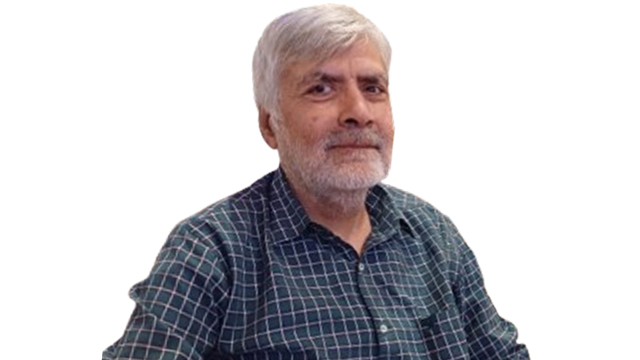
Dr Ramesh Chandra is presently an independent economist. He studied economics at Hans Raj College (Delhi University), Delhi School of Economics, University of California (Berkeley), Glasgow University and Strathclyde University. He taught as lecturer in various colleges of Delhi University before joining the Government of India in advisory capacity. Dr Chandra has also taught Economics in the UK at Strathclyde and Paisley Universities. He has also held professorships at ICRIER and Lal Bahadur Shastri National Academy of Administration, Mussoorie, among others. His areas of interest include Development Economics, History of Economic Thought, Trade and Development and Indian Economic Problems. He was also awarded several scholarships/fellowships by UNDP, British Council and University of Strathclyde. Dr Chandra has a large number of publications to his credit. This includes 68 research papers in reputed international journals and four books – Allyn Abbott Young (2020; Palgrave Macmillan), Endogenous Growth in Historical Perspective: From Adam Smith to Paul Romer (2022; Palgrave Macmillan), Reflections on the Future of Capitalism: From Karl Marx to Amartya Sen (2024; Palgrave Macmillan) and The Economic Thought of Alfred Marshall (2026; Routledge), forthcoming.
About the Interviewer
Mahima Sharma is an Independent Senior Journalist based in Delhi NCR with a career spanning TV, Print, and Online Journalism since 2005. She has played key roles at several media houses including roles at CNN-News18, ANI, Voice of India, and Hindustan Times.
Founder & Editor of The Think Pot, she is also a recipient of the REX Karmaveer Chakra (Gold & Silver) by iCONGO in association with the United Nations. Since March 2022, she has served as an Entrepreneurship Education Mentor at Women Will, a Google-backed program in collaboration with SHEROES. Mahima can be reached at media@indiastat.com
Disclaimer : The facts & statistics, the work profile details of the protagonist and the opinions appearing in the answers do not reflect the views of Indiastat or the Journalist. Indiastat or the Journalist do not hold any responsibility or liability for the same.








.png)